Apple AI agent plans rest on job listings, not a product
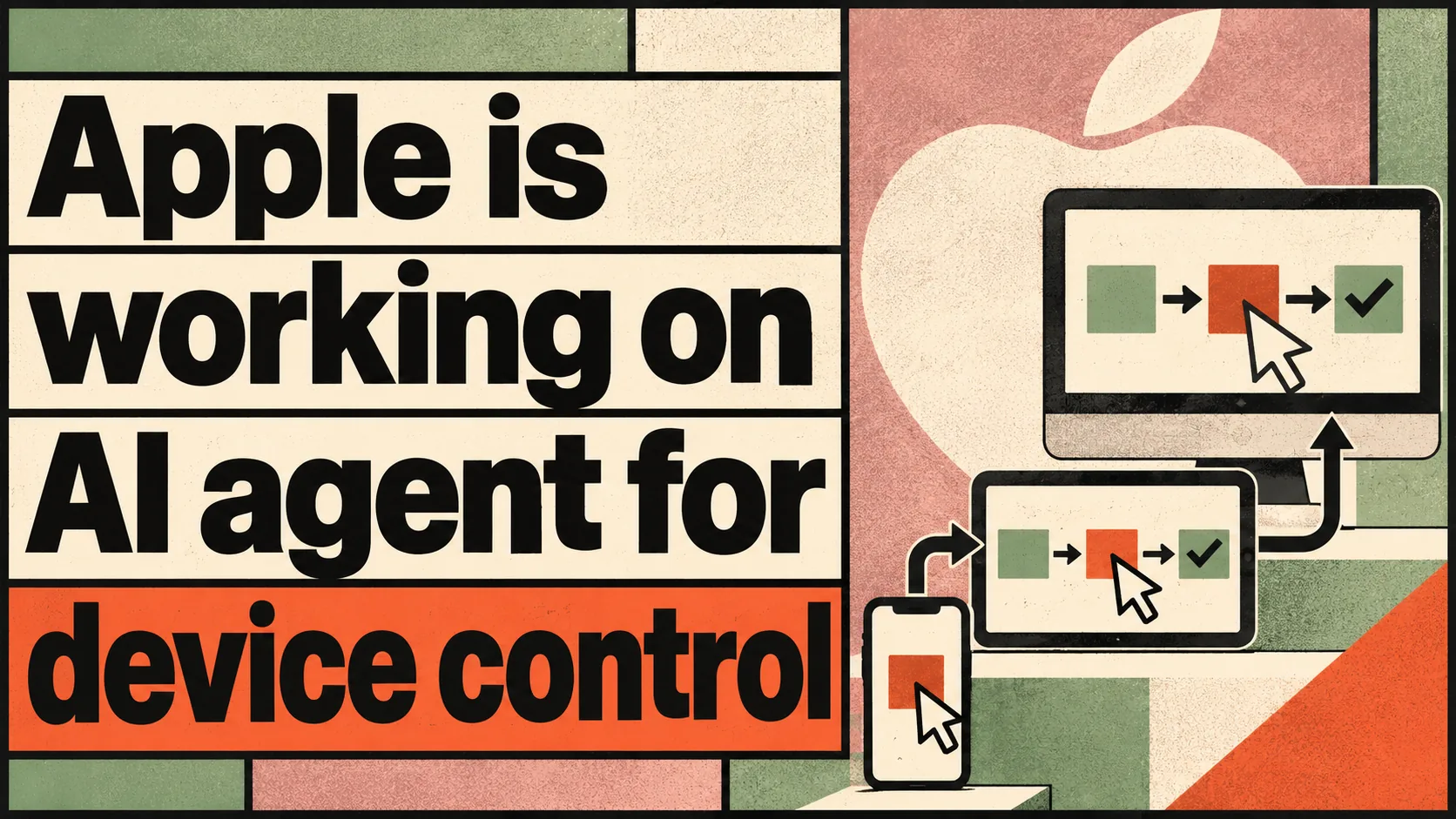
- Bloomberg reports that Apple is hiring a senior engineering manager for a proactive, agentic AI assistant.
- The advertised role covers writing code, browsing the web, controlling applications and navigating devices on a user's behalf.
- The report, published on 19 November 2026, gives no timeline or product details beyond the job postings.
- Apple would be entering a market already pursued by OpenAI, Anthropic and Meta Platforms.
A recruitment notice is not a product. Apple’s move into general-purpose AI agents rests, for now, on job advertisements rather than anything a customer can use. That gap is the honest frame for the story. Bloomberg’s report on Apple is working on AI agent for device control, apps, browsing and coding states that the company is seeking a senior engineering manager for a proactive, agentic assistant able to write code, browse the web, control applications and navigate devices on a user’s behalf. Published on 19 November 2026 and credited to Mark Gurman, the account carries no timeline, no product name and no technical detail beyond the postings themselves.
The distinction worth holding onto is not that Apple wants an assistant, because it already has one. The distinction is scope. A system that answers questions is bounded by the conversation. A system that opens applications, moves through interfaces and writes code is bounded only by whatever permissions, logging and reversal mechanisms its designers build in. Those are engineering decisions with public consequences, and they rarely appear in a launch presentation.
The unit of action changes
When an agent acts rather than suggests, accountability shifts from the tap to the sequence. A user who presses a button can explain what happened. A user whose device has been navigated on their behalf by a chain of model-driven steps may struggle to reconstruct the path at all. The obvious questions follow. What record exists of each step, who can inspect it, how is a wrong action undone, and can the agent be confined to a subset of applications. None of those can be answered from a job listing. Their absence from the public discussion says more than the ambition in the advertisement.
For education and academic work, the coding capability named in the posting carries the clearest consequence. Agents that write and run code change what a submitted artefact proves about the person who submitted it. They widen the distance, too, between work that can be verified and work that merely looks finished. Institutions have spent several years adjusting assessment to a world of fluent text generation. A system that also edits files and executes code removes the last comfortable assumption that the output was typed by hand.
What would need to hold
For the hiring to matter beyond a recruitment signal, Apple would need to publish a permission model a non-specialist can read. It would need to keep an action log a user can audit, and make reversal routine rather than forensic. Competition with OpenAI, Anthropic and Meta explains why the roles exist. It is no evidence that those safeguards arrive first. Until a product exists, the listings describe intent, and intent is the cheapest part of the work.