AI capex slowdown forecast rests on a tenfold revenue gap
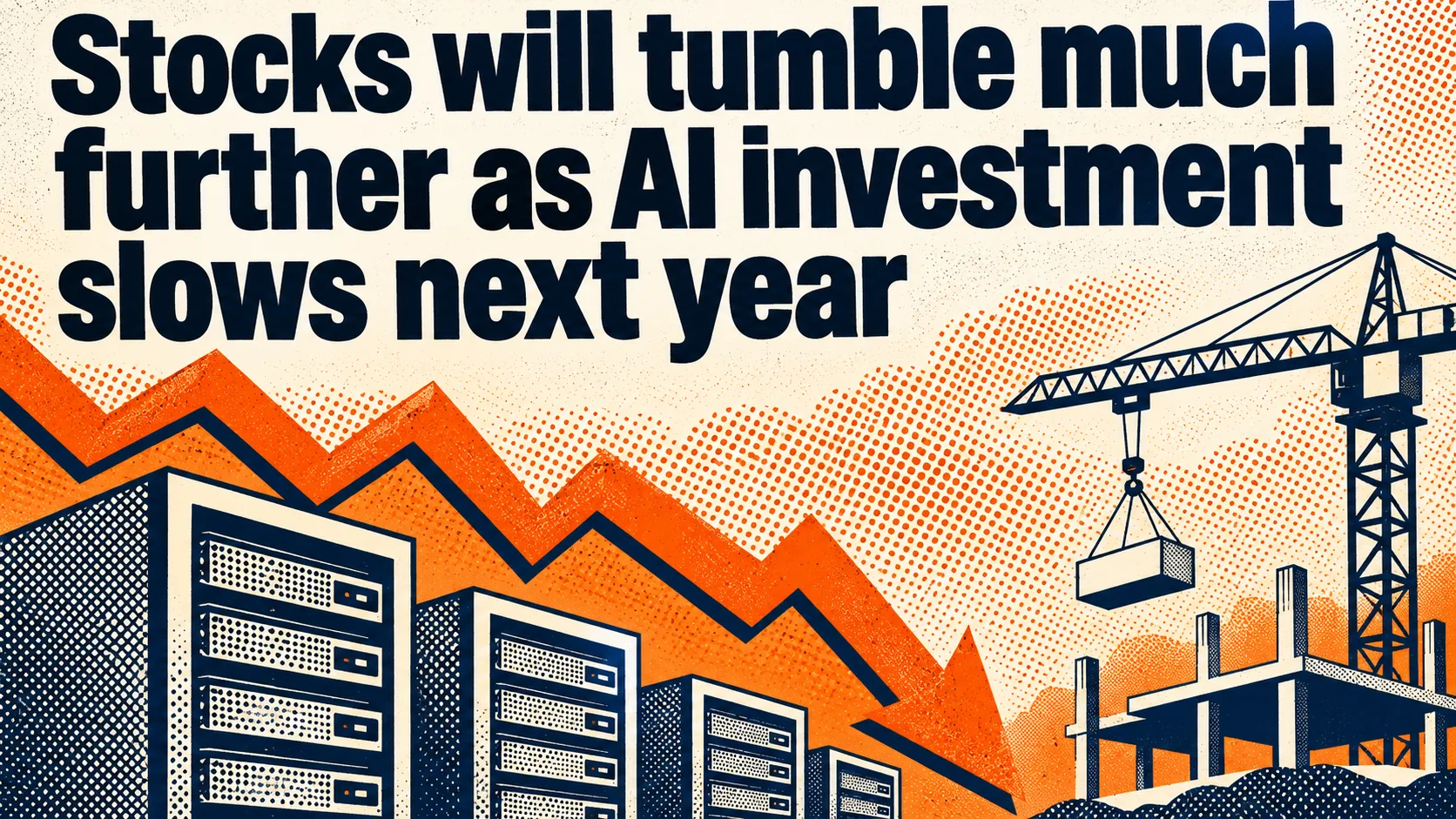
- A small group of hyperscale firms is expected to spend about $800 billion on AI capital expenditure in 2026, double the 2025 figure.
- Capital Economics calculates that external AI revenue would need to grow tenfold by 2030 to sustain that level of spending.
- AI investment added 0.3 percentage points to US GDP growth in 2025, so a capex reversal could subtract a similar amount.
- Taiwan's growth is expected to be hit by around three percentage points and South Korea's by one.
A research note from Capital Economics has put a figure on the distance between what the largest technology companies are spending on artificial intelligence and what their customers are paying back for it. The note, published in early November, estimates that a small group of hyperscale firms will deploy about $800 billion in capital expenditure in 2026, double the 2025 total, and close to $1 trillion in 2027. Set against that, external AI revenue would need to grow tenfold by 2030 to justify the spending. Fortune’s account of the forecast investment slowdown reports the conclusion drawn by the firm’s chief economic adviser, Vicky Redwood: investment growth decelerates in 2027, falls by around 10% in 2028, and the S&P 500 closes 2027 roughly 12% below its level when the note was written.
The equity call is not the interesting part. The revenue test is.
Spending without a matching receipt
Capital expenditure at this scale has become a macroeconomic variable rather than a sectoral one. AI investment added 0.3 percentage points to US GDP growth in 2025, so a reversal of similar size would subtract roughly the same, with a full decline in capex trimming about 0.1% from output. The exposure is also unusually concentrated: a handful of firms carry the commitments, while the suppliers who build the infrastructure absorb the shock. Redwood expects Taiwan’s growth to be hit by around three percentage points and South Korea’s by one, a reminder that the geography of an investment boom is not the geography of its unwinding.
The tenfold figure is the part worth keeping. Capital spending can be defended on internal efficiency, or on cheaper code and faster internal processes, and none of that appears as external revenue. If the case for the build-out rests on customers paying for AI services at scale, then the evidence that matters is paid demand. Usage statistics and pilot programmes will not do.
That distinction travels. In universities and schools, adoption is routinely counted in licences issued, tools enabled and staff trained, while the claims made for the technology concern learning and research quality. Those are harder to measure and easier to assert. An honest account of AI use in education resembles an honest account of AI investment: a clear statement of what was expected to change, and a willingness to check whether it did.
For the forecast to hold, paid demand has to remain weak, productivity gains have to stay confined to work firms already do internally, and the concentration of spending has to translate into a concentrated correction. Each of those is observable, and enthusiasm would not make the argument wrong; revenue would.