Nasdaq 100 fall puts AI's $1tn spending case under scrutiny
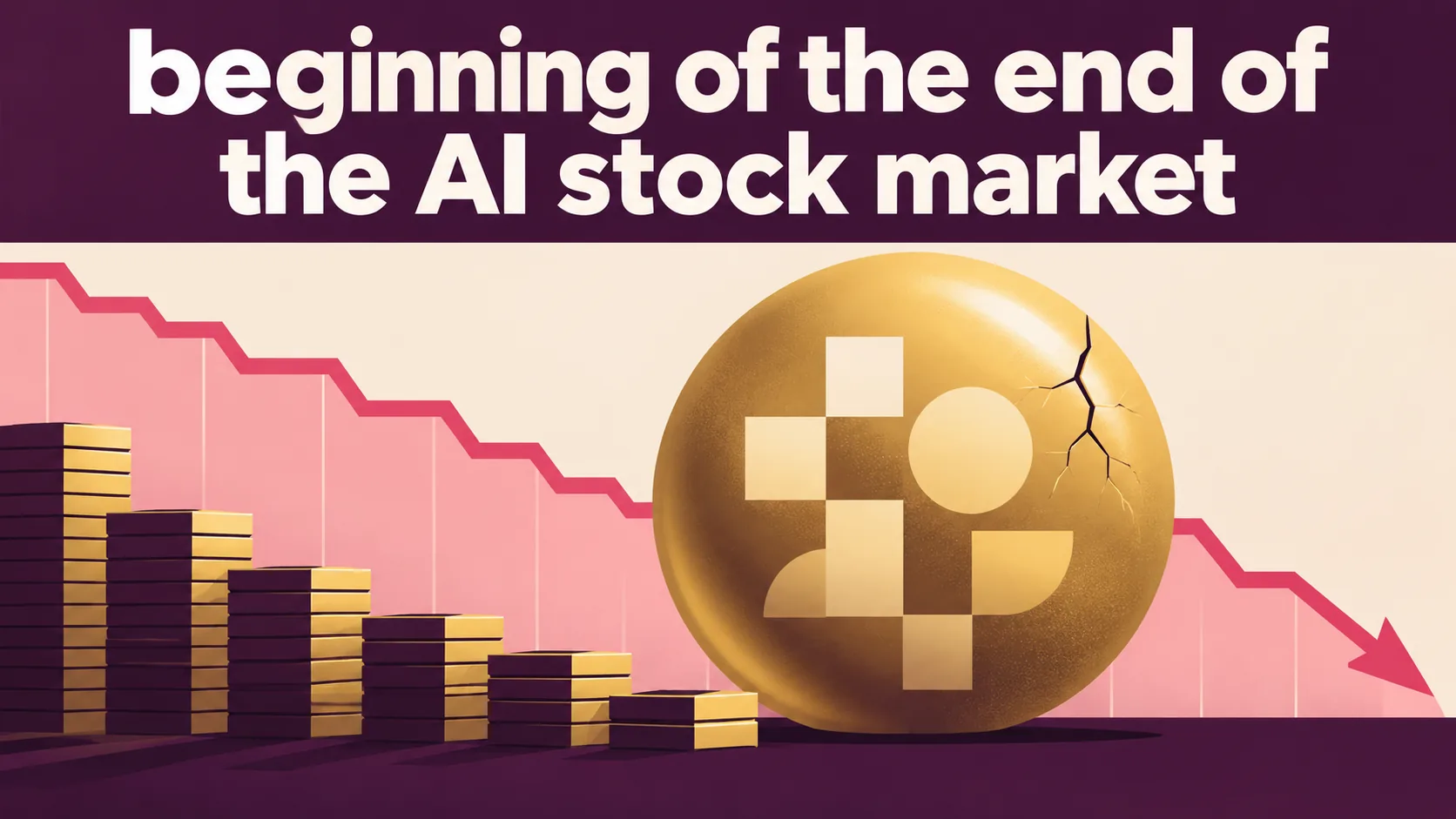
- The Nasdaq 100 fell 5.5% in a single week before partially recovering.
- Corporate bonds from major technology firms now make up nearly 10% of the global investment-grade credit market, up from 0.5% at the end of 2024.
- The failed ASX listing of Australian datacentre operator Firmus is cited among the pressures behind the sell-off.
- Circular financing between chipmakers and datacentre operators adds fragility to the AI build-out, according to NAB chief economist Sally Auld.
The Nasdaq 100 fell 5.5% in a single week, then recovered part of the loss. That whiplash has turned a long-running argument about artificial intelligence spending into a sharper question: who is actually carrying the risk? The Guardian’s account of the sell-off and the IMF’s warning links the retreat to several pressures. Among them is the failed ASX listing of Firmus, an Australian datacentre operator whose planned multi-billion-dollar float had, at one stage, been valued above Telstra.
The scale is not marginal. Investment in AI is estimated at about $US1tn this year, and the International Monetary Fund has put the prospect of an AI bubble bursting at the top of its risks to the global economy. The detail that matters is where the money comes from. Corporate bonds issued by major technology firms now account for nearly 10% of the global investment-grade credit market, against 0.5% at the end of 2024.
Diagnoses differ. Gerard Minack of Minack Advisors argues that investors are overestimating the returns AI will deliver. Raisah Rasid, a strategist at JP Morgan Asset Management, sees the fall as a valuation reset rather than a rejection of the technology. She distinguishes it from the dotcom collapse, and flags two slower threats: open-source models, potentially from China, that could undercut the economics of proprietary AI, and rising public opposition to datacentres and to the technology’s effect on workers. Sally Auld, chief economist at NAB, notes that overbuilding has accompanied earlier technologies, and that circular financing between chipmakers and datacentre operators adds fragility.
That last point deserves more attention than the index level. When suppliers help finance their own customers, reported demand stops being an independent signal: revenue can rise because capital is being recycled, not because anyone outside the arrangement has found a durable use for the product. The exposure is also no longer confined to equity investors willing to absorb losses. Debt held in ordinary credit portfolios spreads the consequences to pension funds and savers who never chose to take a position on machine learning.
The same discipline applies to education. Claims that AI improves teaching or research are increasingly common, and the evidence behind them is uneven. The honest response is to ask what can be verified, by whom, and at what cost, rather than to infer value from the size of the purchase. Institutions buying into the same market are, in a small way, part of the demand curve the bond market is now pricing.
Whether the correction proves to be a pause or the start of something longer, one week’s trading cannot tell us. The question worth holding on to is narrower, and more answerable: what evidence would show that the spending produced something durable, and who is positioned to check it.