Open AI models close the gap with frontier, but deployment is the real question
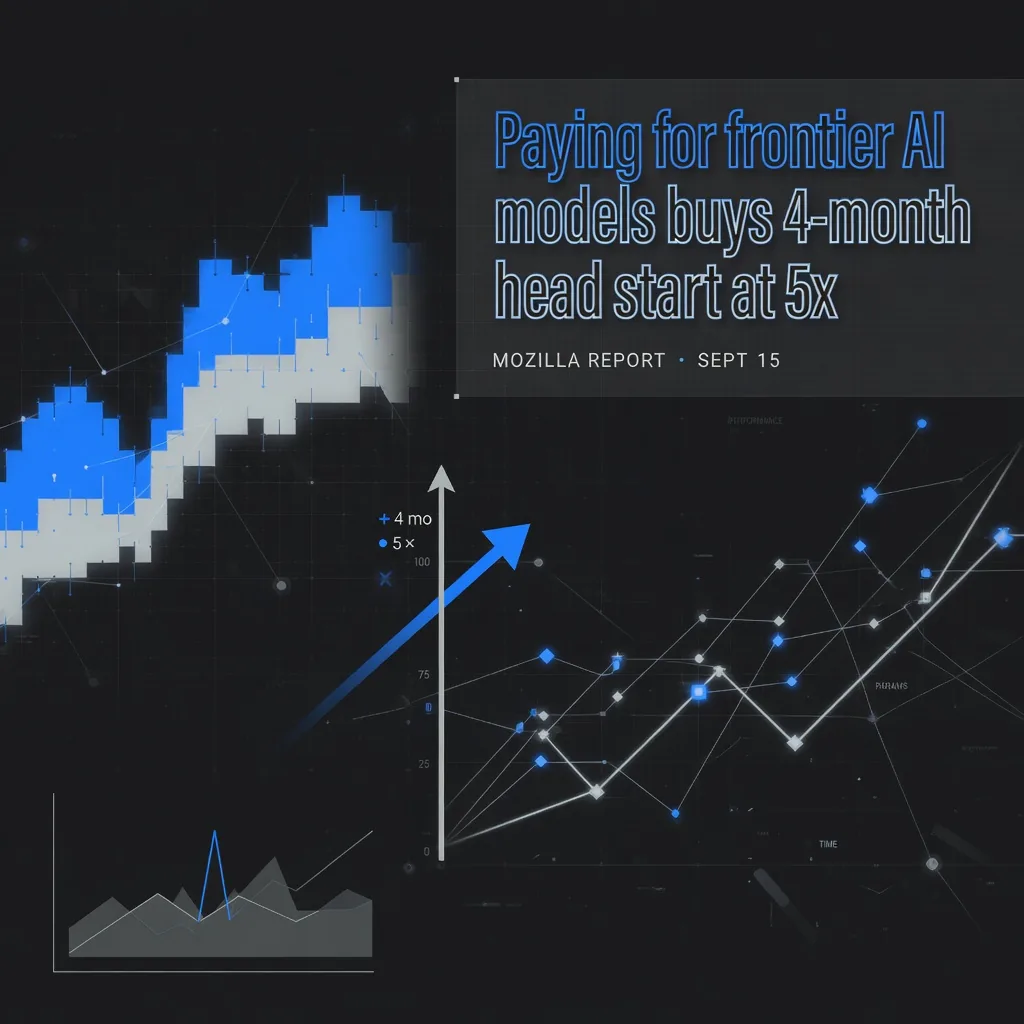
- A Mozilla report found the performance gap between US frontier AI models and the best Chinese open-weights models has narrowed to roughly four and a half months.
- Moonshot AI's Kimi K3 scores within three points of Anthropic's Fable 5 on the Artificial Analysis Intelligence Index at roughly 30 per cent of the cost.
- Closed models continue to attract customers through bundled compliance support and out-of-the-box functionality that many organisations lack the staff to replicate with open alternatives.
- Mozilla's chief technology officer argued closed models remain justified only in narrow workloads such as expert professional tasks and long-context processing.
Paying for frontier AI models buys a four-month head start at several times the cost. Mozilla found this in a report published on 15 September, measuring the performance gap between the most capable closed models from US companies and the strongest open-weights alternatives from Chinese firms. According to Ars Technica’s report on the Mozilla findings, that gap stands at roughly four and a half months. Open models now reach comparable benchmark territory at about a third of the price.
The headline number matters less than the cost asymmetry it reveals. Moonshot AI’s Kimi K3, an open-weights model, scores within three points of Anthropic’s Fable 5 on the Artificial Analysis Intelligence Index while costing roughly 30 per cent as much. For organisations running AI at scale, that ratio is hard to justify for routine workloads. Mozilla’s chief technology officer Raffi Krikorian argued that closed models remain justified only in narrow cases: expert professional tasks, high-intensity retrieval, and long-context processing where the marginal performance gain still pays for the premium.
The arithmetic is straightforward in principle for universities and similar institutions. A campus-wide deployment at 30 per cent of the cost represents a significant budget shift. The real problem is capacity. Open-weights models can be downloaded and run locally, which offers potential advantages around data sovereignty and cost control, but they still require infrastructure and staff to operate. Closed vendors bundle compliance support and accountability frameworks precisely because many organisations lack the personnel to build those protections independently. That gap between theoretical cost saving and practical deployment readiness is where the decision actually sits.
Most routine AI workloads no longer need frontier models, and the performance data supports that reading. Whether open models become the institutional default depends less on benchmark scores and more on whether organisations invest in the technical capacity to run them. Four and a half months is a narrow gap. Closing it further may matter less than the operational infrastructure required to capitalise on what is already available.