UK human rights committee demands dedicated AI bill
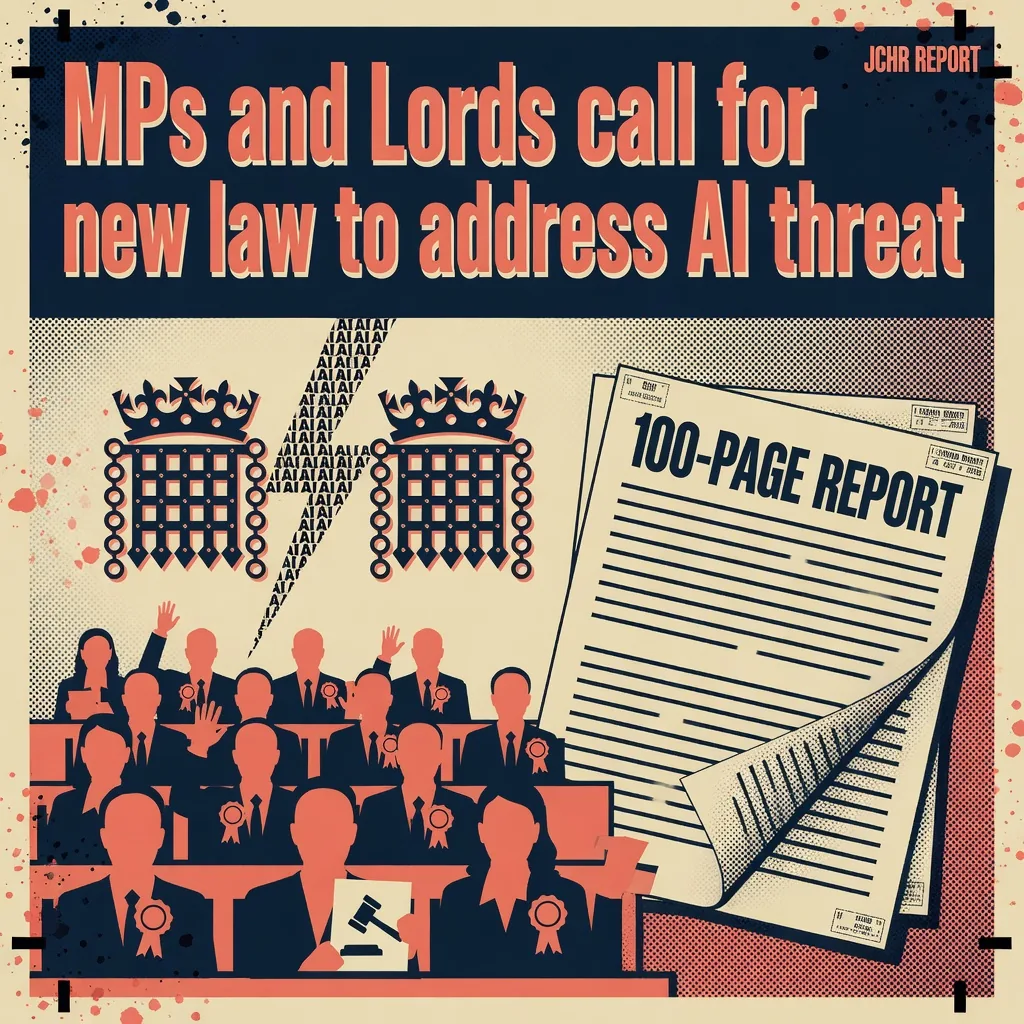
- The UK's Joint Committee on Human Rights concluded existing law cannot adequately address AI's human rights risks and called for a dedicated statutory bill and independent oversight body.
- The committee proposed prohibitions on subliminal techniques and inappropriate biometric profiling, citing deepfakes and non-consensual facial scanning as current examples of inadequately addressed harms.
- Labour's 2024 manifesto promised binding AI regulation, but no dedicated AI bill appeared in the 2025 King's Speech.
- The committee's report was published the day after Anthropic's chief executive proposed a global regulatory framework, highlighting simultaneous pressure from industry and parliament for AI rules.
The UK’s Joint Committee on Human Rights concluded that current domestic law cannot adequately address the human rights risks posed by artificial intelligence, and has called for a dedicated statutory AI bill alongside an independent oversight body. The cross-party committee of MPs and peers published a 100-page report on 14 September 2026 setting out the case for legislative action that, in its view, existing frameworks cannot deliver.
What the committee wants
The report proposes specific prohibitions on uses it considers unacceptable, including subliminal manipulation techniques and inappropriate biometric profiling. It also cites the proliferation of sexualised deepfake images and non-consensual facial scanning as examples of harms that current regulation cannot reach effectively. An independent body would, under these proposals, carry statutory enforcement powers rather than operating as an advisory or voluntary mechanism.
Labour’s 2024 manifesto committed to binding AI regulation, yet no dedicated bill appeared in the 2025 King’s Speech. The committee’s intervention signals parliamentary frustration at that gap. Education minister Georgia Gould responded that the government was already acting on deepfakes and cybersecurity, and emphasised the need to monitor AI development closely. That framing sits uneasily alongside the committee’s central claim: that monitoring and existing powers are precisely what has proven insufficient.
Implications for AI use in education
For universities and schools, the report’s direction matters practically. If an oversight body gains statutory footing and prohibitions on certain biometric or subliminal applications are enacted, institutions deploying AI-driven assessment tools, proctoring software or learning analytics would face a clearer compliance landscape than the current patchwork of guidance and data protection duties. At present, the absence of sector-specific AI statute means that educational AI procurement often depends on institutional risk appetite rather than binding rules.
The committee’s framing also reframes the AI-in-education debate. It moves beyond the familiar productivity-versus-plagiarism axis toward questions about consent, profiling and pupil autonomy. Whether those deeper concerns translate into law will depend on legislative priority and government appetite.
What comes next
The committee’s chair, Labour MP Alex Sobel, argued that no country currently has an AI legislative framework fit for purpose. That observation arrived the day after Anthropic’s chief executive proposed a global regulatory framework, with other major AI company leaders publicly backing the call. The juxtaposition is telling: industry and parliament are both pressing for rules, but from different directions and with different stakes.
Whether the UK introduces a bill before any of those global frameworks take shape, or whether the government instead expands existing sectoral regulation, remains an open question. The manifesto commitment and parliamentary pressure are both on the record, yet the legislative slot has not yet appeared.
BBC’s report on MPs and Lords call for new law to address AI threat to human rights provides the source reporting for this article.