Nvidia Shifts AI Strategy Beyond GPUs to Data-Centre Orchestration
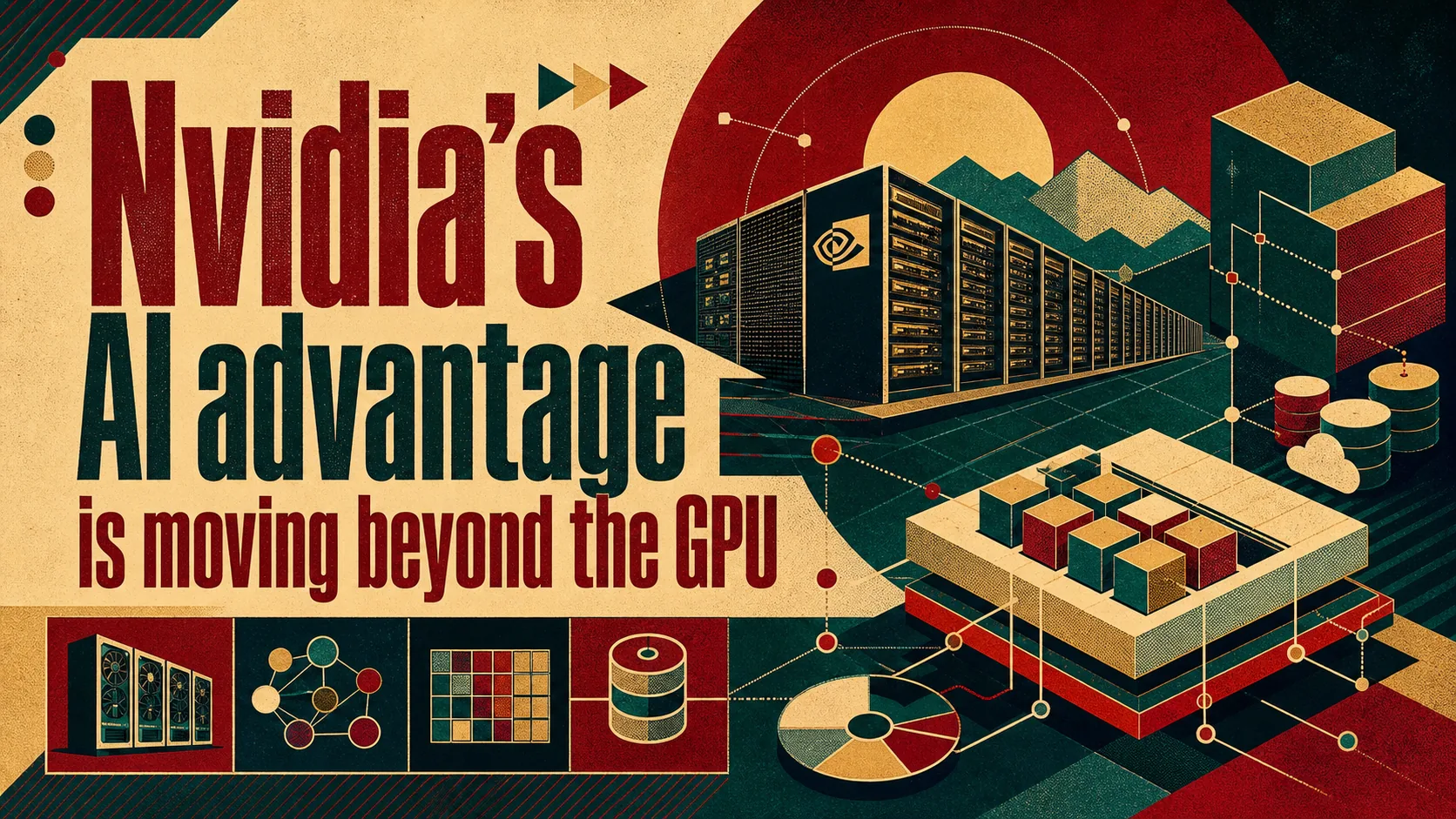
- Nvidia's Vera Rubin architecture combines CPUs, GPUs, and specialised storage racks to improve system-wide data orchestration.
- Memory-orchestration improvements delivered up to three times higher throughput in specific operations by improving flash storage utilization.
- Competitors and model builders are similarly redesigning hardware to minimise internal data movement rather than relying solely on processor speed.
- Systemic efficiency and energy constraints are replacing individual chip benchmarks as the primary bottleneck in artificial intelligence infrastructure.
Nvidia’s technical focus is shifting from raw graphics processing power toward data-centre orchestration hardware. This shift moves competition in artificial intelligence computing to a new infrastructure layer. In TechCrunch’s analysis of Nvidia’s data-centre architecture shift, the company’s Vera Rubin system integrates GPUs alongside CPUs, inference accelerators, and custom storage racks to manage data traffic across gigawatt-scale deployments. Rather than relying solely on raw compute cycles, the design targets structural memory bottlenecks that slow down large-scale artificial intelligence operations.
This shift matters because raw processor performance yields diminishing returns when data movement creates congestion inside server farms. According to Nvidia’s storage technology team, the Vera CPU addresses memory-orchestration constraints. It delivers up to a threefold improvement in specific throughput operations by keeping high-speed flash storage fully utilised. Simultaneously, custom hardware initiatives like OpenAI’s Jalapeño processor pursue similar efficiency gains by reducing data movement within single integrated systems. These architectural approaches demonstrate that energy use, heat dissipation, and systemic communication speed have become the primary constraints for modern machine learning infrastructure.
For educational institutions and research organisations evaluating artificial intelligence deployments, this transition highlights a practical divergence between infrastructure marketing and operational reality. Public discussions frequently focus on raw model parameters or processing speeds. In practice, institutional efficiency depends heavily on resource access, system throughput, and operational overhead. High-throughput data orchestration determines whether computational resources remain accessible for research or become prohibitively expensive to maintain at scale.
Whether data-centre orchestration creates a durable advantage depends on how effectively alternative architectures match these system-wide efficiency gains. Cloud providers building proprietary silicon continue to challenge single-vendor hardware environments. If open standards or rival designs achieve comparable traffic control without requiring end-to-end proprietary infrastructure, the bottleneck in artificial intelligence deployment may shift once again: moving from system orchestration to energy access and software optimization.