Hormuz Closure Adds $1 Billion to South Asia's LNG Bill
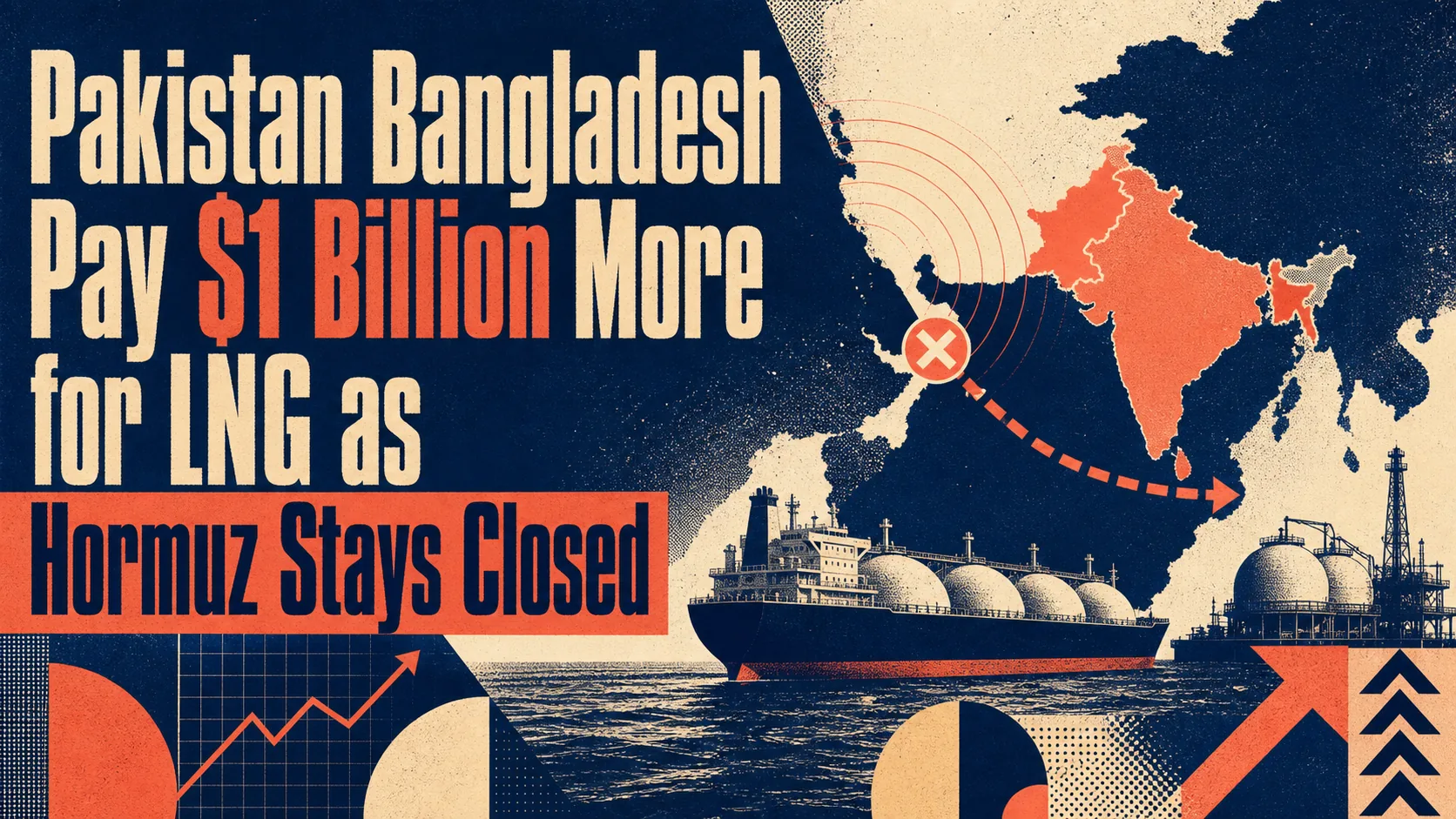
- Pakistan and Bangladesh are expected to pay at least $1 billion more for LNG after the Strait of Hormuz remained closed.
- Five months of Middle East conflict increased reliance on more expensive spot-market cargoes.
- Imported-fuel dependence leaves both countries exposed to disrupted shipping routes and commodity-price volatility.
- The higher bill raises questions about supply diversification, contingency planning and transparent energy-risk assessment.
Pakistan and Bangladesh are expected to pay at least $1 billion more for liquefied natural gas after the Strait of Hormuz remained closed and disrupted established supply arrangements. Bloomberg’s report on the two countries’ rising LNG costs attributes the increase to five months of conflict in the Middle East, which has left them dependent on more expensive spot-market cargoes.
Both countries rely on imported fuel for electricity generation and other domestic energy needs. That exposure matters because LNG had appeared both abundant and affordable for developing Asian economies. The disruption has weakened that advantage. When contracted supply routes become unreliable, buyers with limited room in their public finances have to purchase cargoes at short notice.
The cost of assumed reliability
The extra billion dollars turns a commodity-market shift into a policy warning. An energy strategy can appear economical while the region remains stable and transport routes work as planned. Long-term contracts may also perform as expected. Once those assumptions fail, the strategy becomes markedly less affordable. For cash-constrained governments, volatility in an essential import complicates decisions about electricity supply and the use of scarce public funds.
This makes the issue one of governance as well as energy. Import strategies should be judged by their price under ordinary conditions and by who carries the risk when a route closes and spot purchases become unavoidable. Transparent stress tests would make that exposure clearer. So would open disclosure and credible contingency planning. None would remove geopolitical risk, but they would make the trade-offs visible before an emergency presents them as an invoice.
Diversification may involve changing suppliers or routes. It may also include alternative energy sources. The Bloomberg account, however, does not establish which mix would be cheapest or most reliable for either country. That distinction matters. Resilience is easy to praise in the abstract and rather harder to design when each option carries infrastructure costs. Delivery constraints and fiscal consequences must also be considered. Even so, comparisons based only on routine purchase prices exclude the cost exposed by disruption. The apparent saving then depends on leaving a substantial risk outside the calculation, which makes for tidy accounting but weak preparation.
The episode also challenges the habit of treating affordability and security as separate policy tests. A fuel can look inexpensive on a spreadsheet, yet prove costly when its supply depends heavily on a maritime bottleneck. The question left by the Hormuz closure is whether future energy plans will price resilience openly or continue discovering its value only after the usual route is no longer available.