University Course Reviews Need Evidence, Not Only Savings
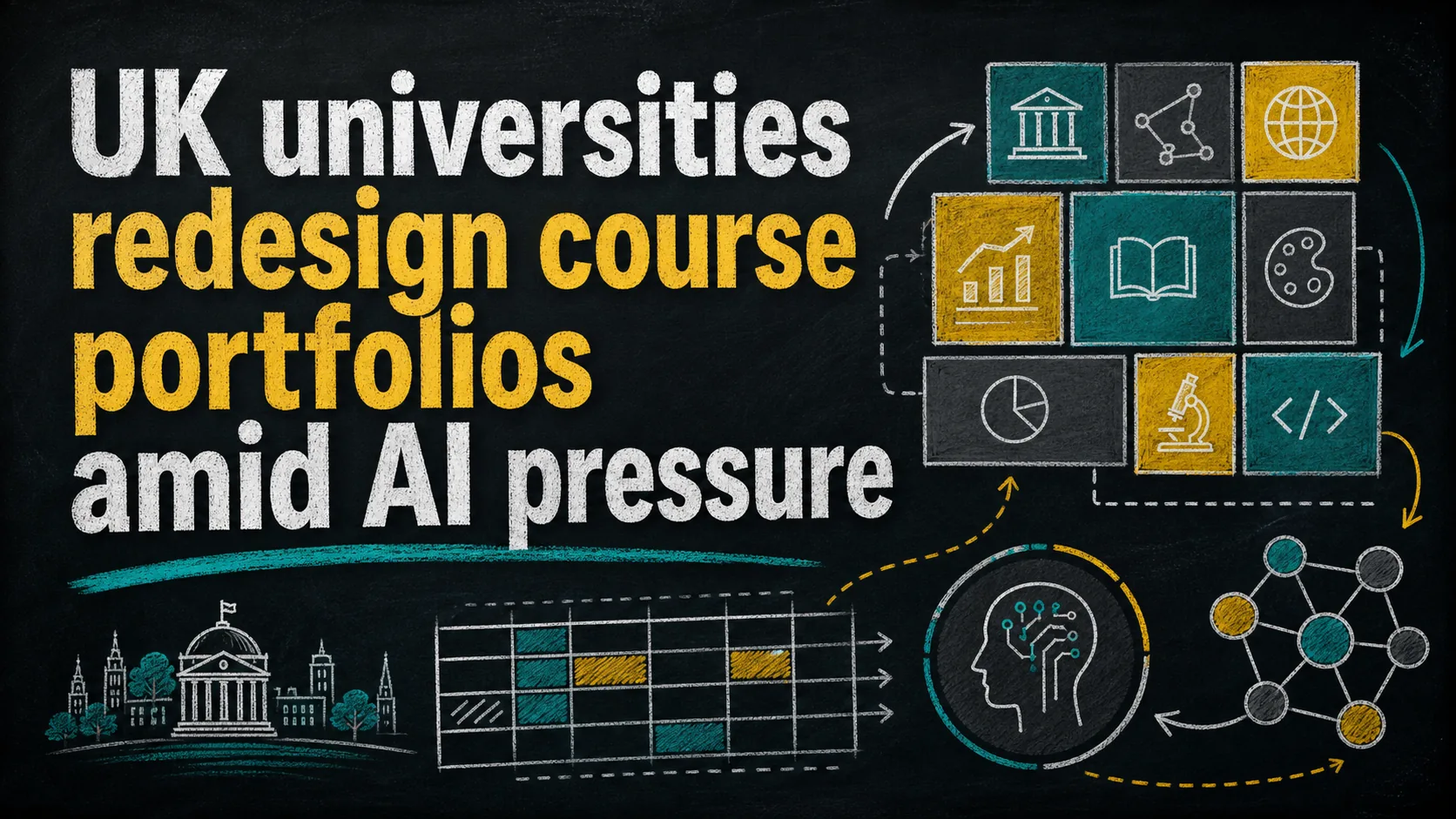
- HEPI reports 6,301 programme withdrawals and 4,321 additions between successive university cycles.
- Portfolio reviews affect students, staff, employers and regional access to degree-level study.
- HEPI argues that effective reviews use student, employer, labour-market and financial evidence.
- AI capability should be explicit in course design, assessment and academic integrity practice.
University course reviews need evidence, not only savings
UK universities are redesigning course portfolios as financial strain, compliance demands and rapid AI adoption converge. The central change is a shift in institutional practice, rather than a single national rule. Programmes are being added, withdrawn and reshaped through portfolio reviews that increasingly determine which subjects remain available to prospective and current students.
HEPI’s analysis of university portfolio review reports substantial churn between successive cycles, with 6,301 programmes withdrawn and 4,321 introduced. Such decisions affect students choosing courses, staff whose teaching provision may change, employers seeking particular capabilities and regions that depend on local degree routes. In practice, choices are made through institutional governance processes, programme-level financial data and regulatory requirements, often under severe time pressure.
The risk is that course review becomes a narrow exercise in balancing books. Financial viability matters, particularly where institutions face falling attendance and consider mergers. It does not, however, establish whether a programme prepares graduates for changing work and public life. HEPI argues that more durable reviews begin with a longer-term academic and civic purpose. They then draw on evidence including student experience, graduate outcomes, employer insight, labour-market information and programme finances.
That approach matters for honest, verifiable AI use in education. Students need opportunities to learn when AI-assisted work is appropriate, how to document its use and how to test outputs against reliable evidence. Removing or reshaping courses without considering those capabilities could leave institutions treating AI as a budgetary complication, rather than an educational responsibility.
The article cites the Pearson/AWS AI Readiness Report 2026, which found that 28% of employers and 13% of UK students believed universities were keeping pace with AI change. It also cites HEPI’s student survey, in which 68% of students described AI skills as essential while fewer than half felt adequately supported by staff. These figures do not prescribe a standard curriculum. They do strengthen the case for making AI capability visible in course design, rather than assuming it will emerge by osmosis. Universities have tried that approach before with other transferable skills. It rarely ages well.
What remains to be evidenced is whether portfolio reviews alter teaching and assessment in ways students can see, rather than merely changing course lists. Institutions will need to show how student and employer input was used, what evidence informed decisions and whether revised provision improves graduate readiness without narrowing access to worthwhile study.