New York Pauses Hyperscale AI Datacentre Permits
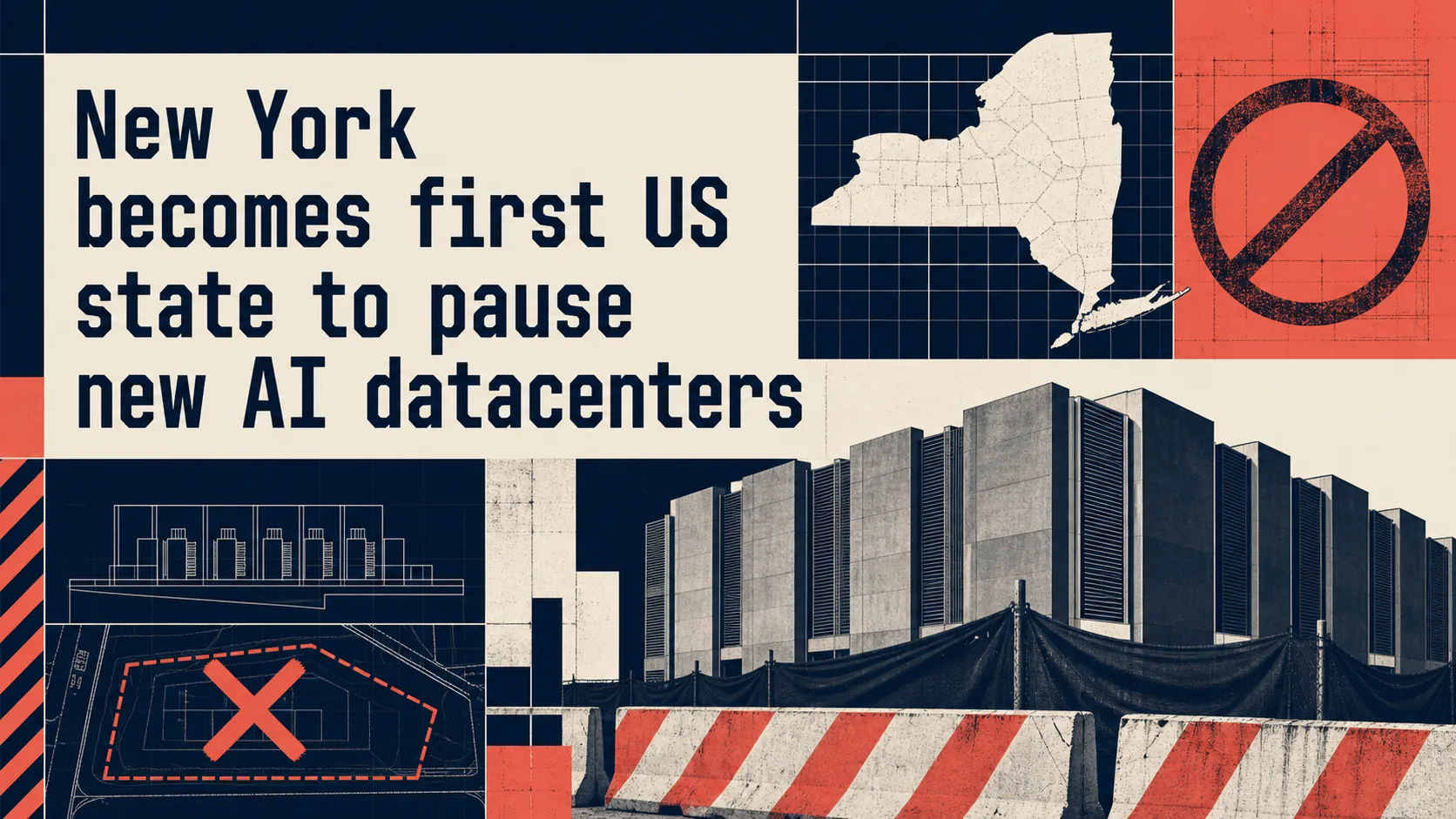
- New York has imposed a one-year pause on state permits for new hyperscale AI datacentres exceeding 50 megawatts.
- State regulators are directed to develop standards on environmental effects, energy demand and water use.
- New York is considering higher energy-cost requirements, self-supplied power and ending tax exemptions for large facilities.
- The order may provide a regulatory model for other jurisdictions considering AI infrastructure limits.
New York has paused state permitting for new hyperscale AI datacentres for one year. The executive order, signed by Governor Kathy Hochul, applies to proposed facilities with more than 50 megawatts of electrical capacity, a threshold covering the largest sites built to run AI systems at industrial scale.
The Guardian’s report on New York’s hyperscale datacentre pause explains that the order is not a blanket ban on AI or every datacentre. It is a regulatory pause for the biggest proposed facilities while state regulators develop standards on environmental effects, power demand and water use. New York is also considering whether operators should bear more of their energy costs or generate their own electricity, alongside a proposal to remove tax exemptions for large facilities.
That practical distinction matters. Large computing sites consume resources, which is hardly news. The issue is that public permitting has often struggled to keep pace with the speed and scale of the AI infrastructure race. A one-year pause creates room to decide who pays when local grids need upgrading, water supplies come under pressure, or nearby residents face higher bills. It is an unglamorous question, which is usually where the serious consequences lie.
This is as much a policy about honesty as infrastructure. AI products can seem weightless at the point of use, a prompt in and an answer out, yet they depend on physical systems with real costs. Education has its own version of that problem. Institutions are being asked to make sensible decisions about AI while vendors, students and staff work with incomplete visibility into how systems are built, used and assessed.
Higher education should not respond by banning AI outright. That would confuse a governance problem with a technological one. Nor should it treat adoption as self-validating simply because a tool is convenient or fashionable. Honest AI use depends on being able to explain what a system does, what it costs, where responsibility sits, and how claims about its value can be checked.
New York’s order may become a template for other jurisdictions, particularly as more states consider similar measures and local resistance to datacentre development grows. The immediate test will be whether the resulting standards are specific enough to shape future projects, rather than merely delay them. For education and academic work, the parallel is worth watching: pauses are useful only when they lead to clearer rules, better evidence and decisions that can survive scrutiny.